


The critical importance of source conditions in tin mineralisation
Researchers from the University of St Andrews and the University of Oxford have disentangled the primary drivers of tin mineralisation, revealing that the defining characteristics of tin granites are established at their geological source rather than through later magmatic processing. The findings, published in Geology, have significant implications for the discovery of greenfield deposits critical to the energy transition.
Electrification, which is at the heart of the transition to net zero, will only be possible with sufficient supplies of critical metals. Tin is one such metal; it is an essential component of the solder used in all modern electronics. Consequently, there is an urgent need to understand the processes governing tin mineralisation to unlock new supplies with a smaller environmental footprint.
In this study, the researchers investigated the petrogenesis of “tin granites”, highly evolved magmatic rocks responsible for the majority of the world’s tin supply. These granites have traditionally been considered the result of extreme fractional crystallisation, where tin is concentrated in the residual melt as the magma cools and crystallises. However, this new study challenges that view, demonstrating that the key features of tin granites are driven by their source.
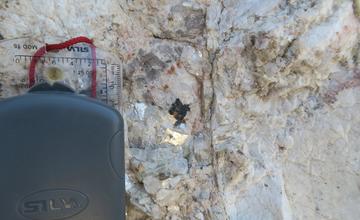
As well as being tin-rich, these granites have long been recognised as highly reduced, belonging to the “ilmenite series”. Until now, quantitative models have focused on understanding the tin enrichment itself, but not this reduced signature. By employing the latest advances in thermodynamic modelling, the researchers sought to answer how a magma that is both tin-rich and reduced is formed.
"We’ve traditionally assumed tin granites become enriched during cooling and crystallisation. In fact, our study reveals these magmas are essentially born this way. Unless you start with a tin-rich, highly reduced source rock, you will never form a tin deposit." Lead author, Joseph Benson.
The authors show that the ilmenite series character of tin granites is inherited directly from the partial melting of highly reduced metasedimentary rocks. Furthermore, by coupling the thermodynamic models with recent experimental studies, they demonstrate that the partial melting conditions yielding an ilmenite series melt occur exactly within a “redox transition zone” where tin is preferentially enriched in the magma.
The modelling highlights a critical flaw in traditional theories: fractional crystallisation actually oxidises the residual magma. This means models relying on extreme fractional crystallisation are inconsistent with the reduced signature of tin granites. Instead, tin mineralisation necessitates a source rock that is already enriched prior to melting.
The study provides new, quantitative constraints on tin granite petrogenesis, highlighting the critical role of source conditions in governing whether a particular magma can form a tin deposit. It reveals that the scarcity of tin granites is ultimately controlled by the rare convergence of tin-rich, reduced protoliths rather than magmatic processes.
The paper “The tin granite trade-off: Modeling redox evolution during magmatic processing” is available to read in Geology at https://doi.org/10.1130/G55195.1.

