

Geofacilities

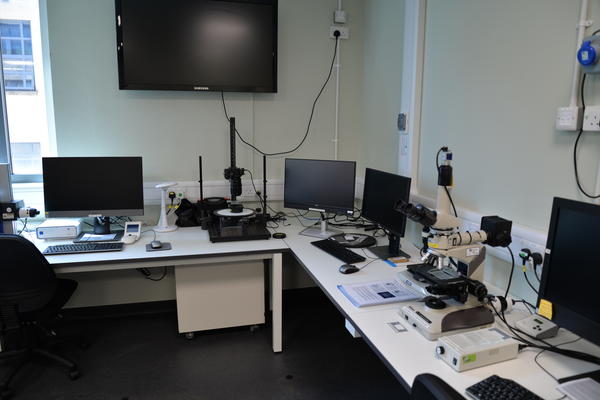
Our Facilities
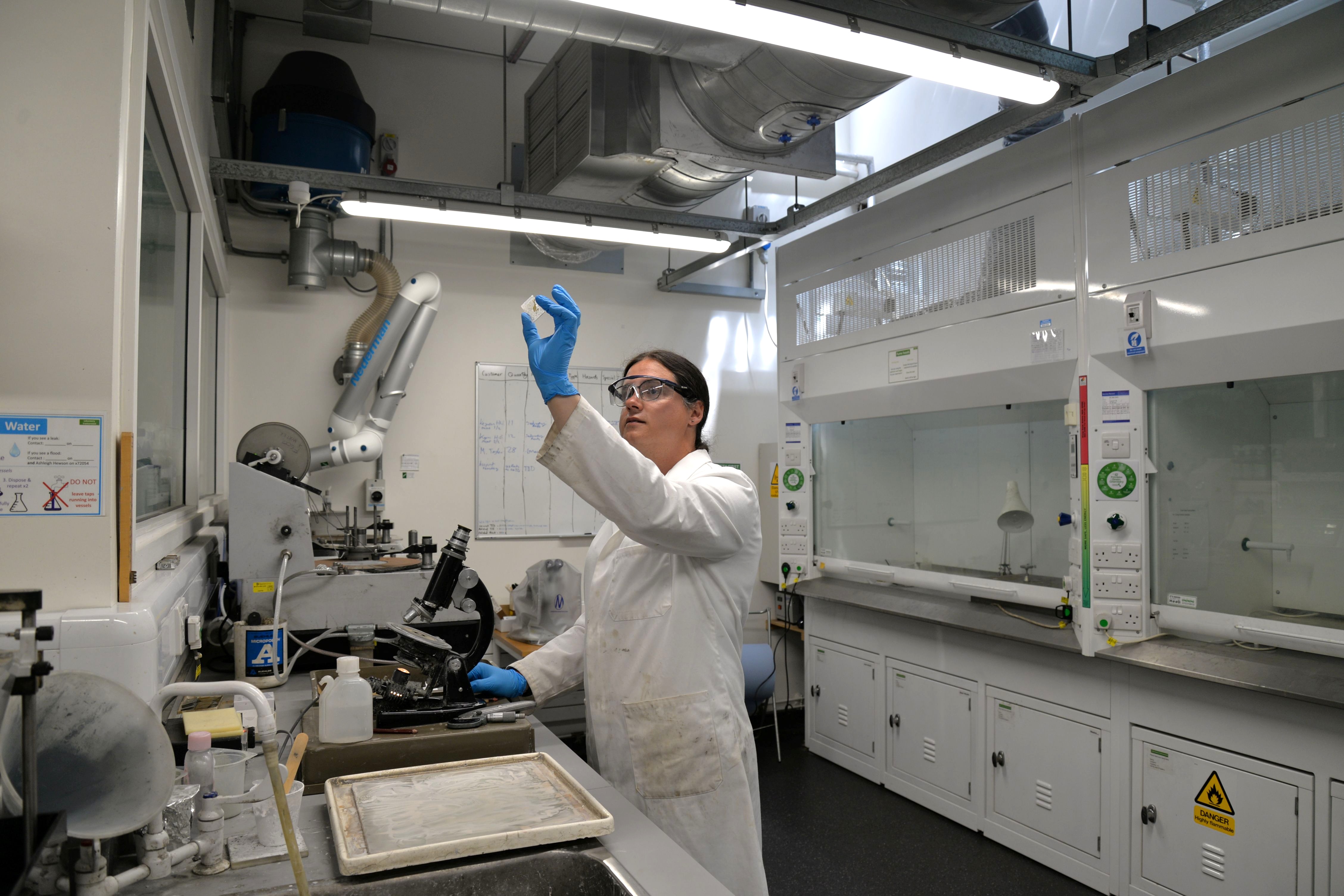
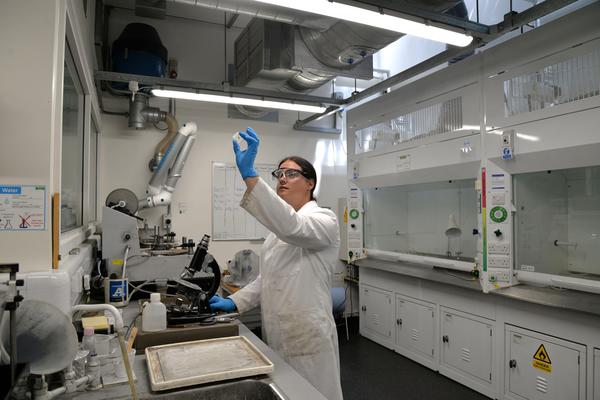
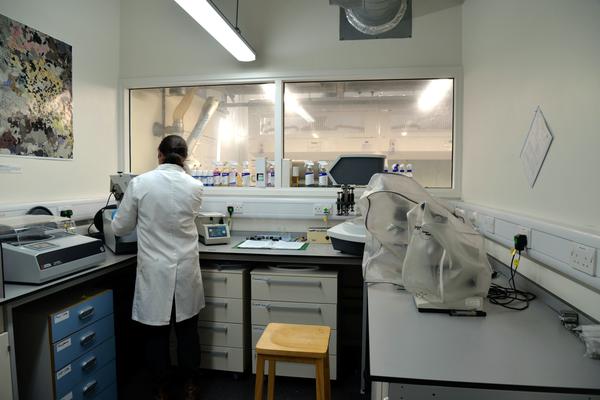
We have several instruments to support the petrological, paleobiological, and bio-geochemical research undertaken within the department.
Please contact Virginia (virginia.ettwein@earth.ox.ac.uk) with any questions.

Available equipment
|
Microscope |
Key Features | Magnification |
|---|---|---|
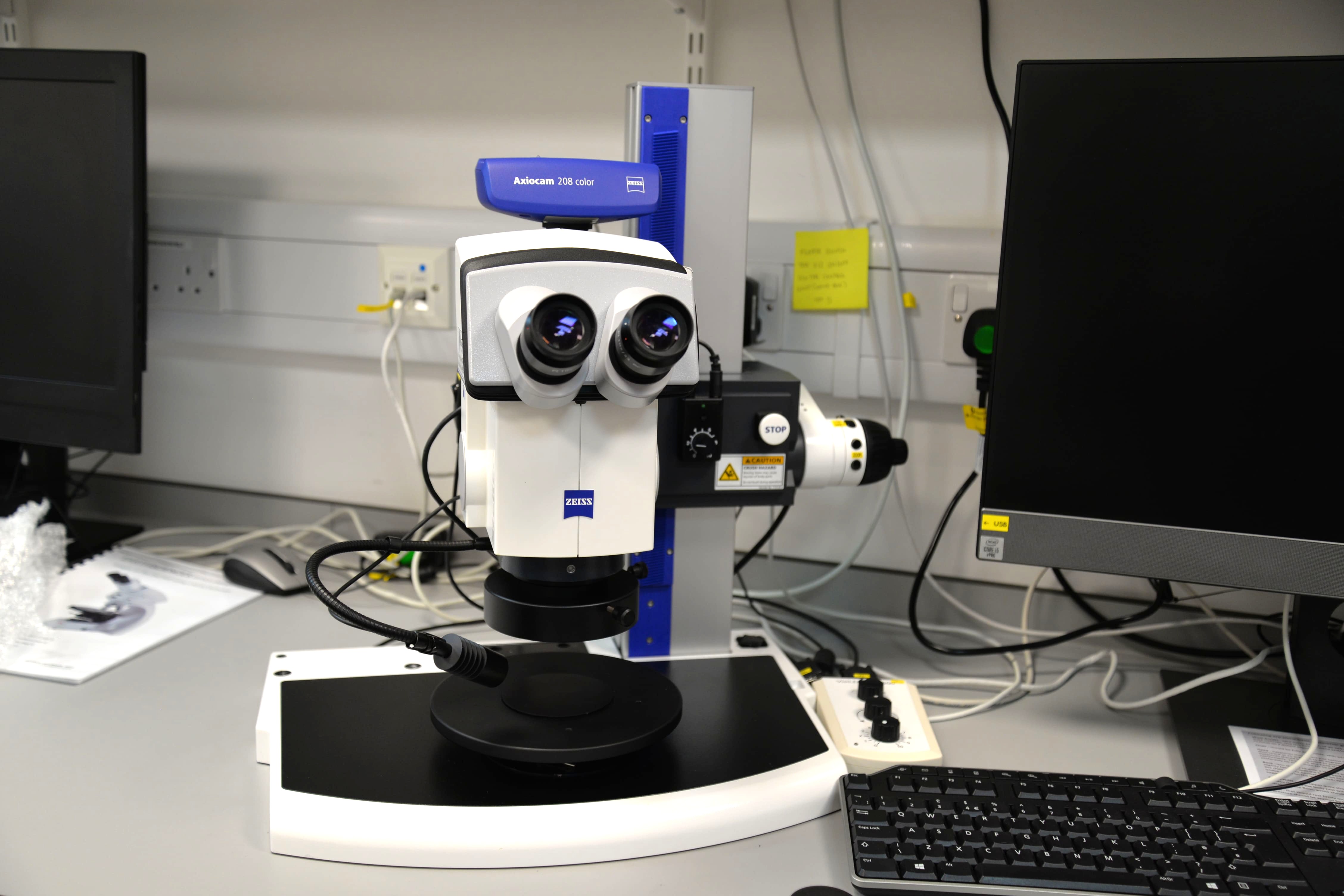
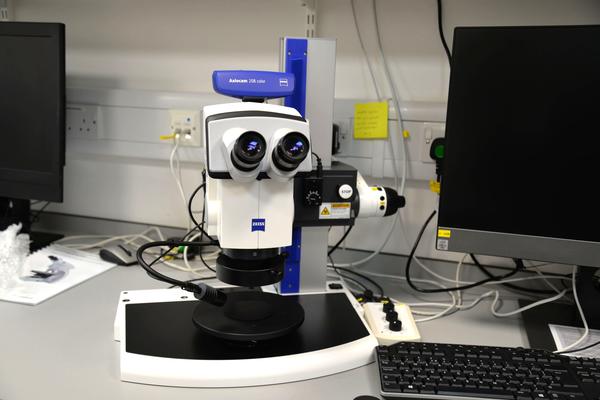
| Zeiss SteREO Discovery V12 stereo microscope | Gliding stage; drawing arm; ring illumination; swan-arm illumination; AxioCam 208 colour camera; imaging software | Achromat S objectives: 0.3x, 0.63x, 1.0x, and 1.5x |
| Meiji EMZ-5TR | 1x, zoom range 0.7–4.5 | |
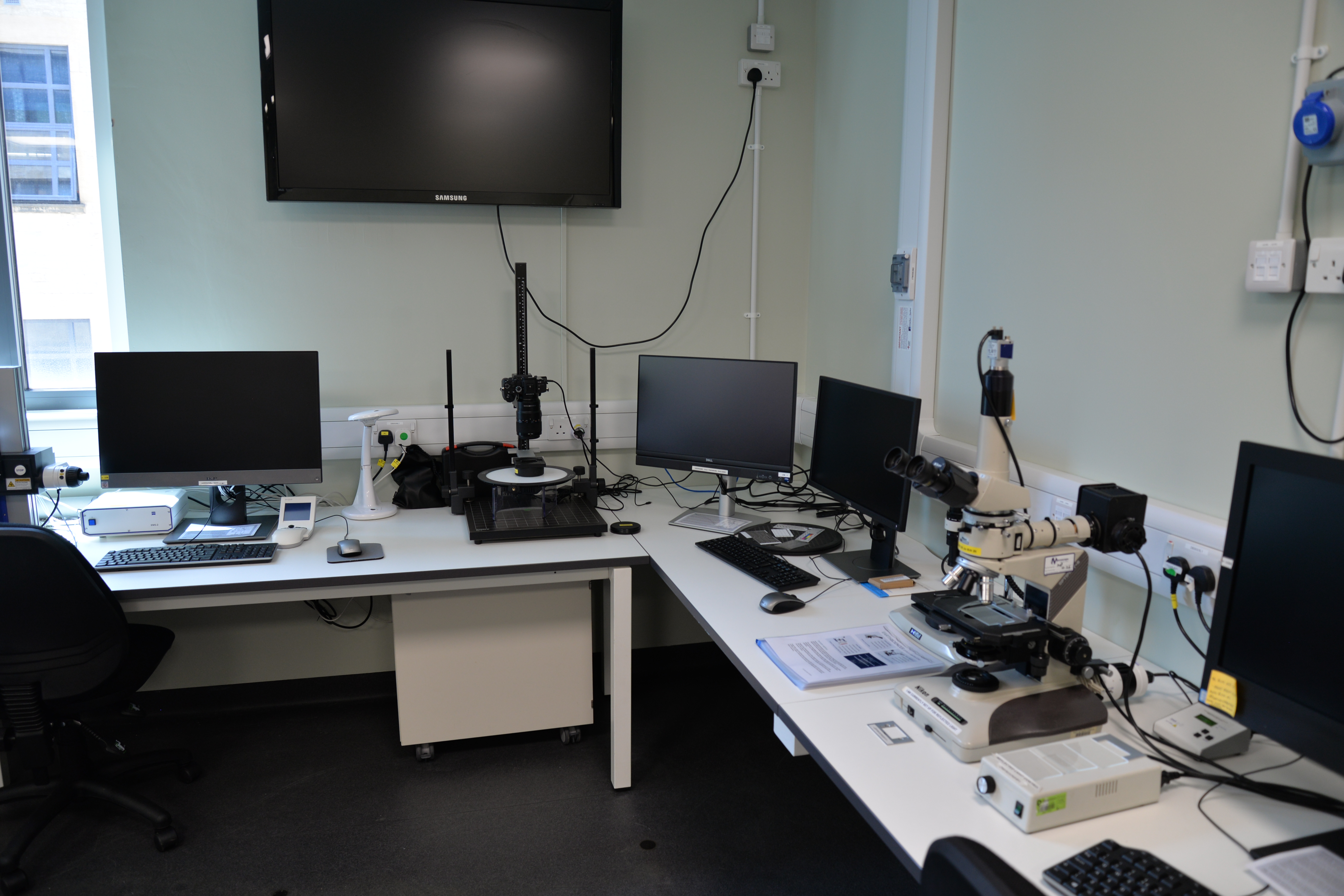
| Nikon Optiphot-2 | x-y stage; transmitted illumination; epi-fluorescence illumination | M Plan objectives: 5x, 10x, 40 |
| Nikon Labophot biological microscope | x-y stage; phase objectives | Nikon objectives: X10/0.25, x20/0.4, x40/0.65, x100/1.25 oil |
| Leica DMRX polarising microscope | Transmitted illumination; incident illumination; epi-fluorescence illumination; Zeiss AxioCam 208 colour camera; Zeiss Zen software |
N Plan 2.5x/0.07 Pol, HC PL Fluotar 10x/0.30, |
| Leica DM750P polarising microscope | Transmitted illumination; camera system | Hi Plan objectives: 4x, 10x, 20x, and 40x |
| Wild M420 Macrozoom stereozoom microscope | Apozoom lens | 0-50x |
| Wild M8 stereozoom microscope | Drawing arm; rotating polarising stage; ring illumination; swan-arm illumination | 0-50x |
We have a variety of equipment available to prepare samples for thin sectioning and geochemical analysis.
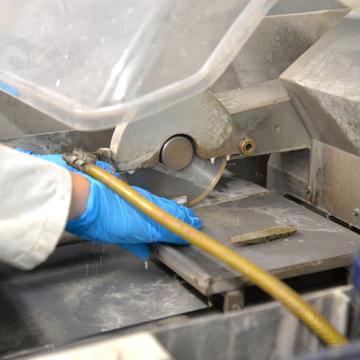


Rock Cutting
Available equipment:
- Trim saws with continuous-rim blades in 6", 7", and 10" diameters; maximum sample sizes 45 mm, 50 mm, and 70 mm respectively
- Motacutter with horizontally mounted 14" diamond blade for slabbing medium-sized rock samples; maximum sample size 100 mm
- Pillar drill set up for coring rocks
- MetPrep C10 rock saw with clamps
- MetaServ grinder-polisher
- Production Techniques Lapmaster lapping machine for lapping rock billets and hand specimens
- AGS Diamond grinders
- ATM twin-head grinder
- Buehler PetroThin for sectioning and grinding thin sections
Rock Crushing
Available equipment:
-
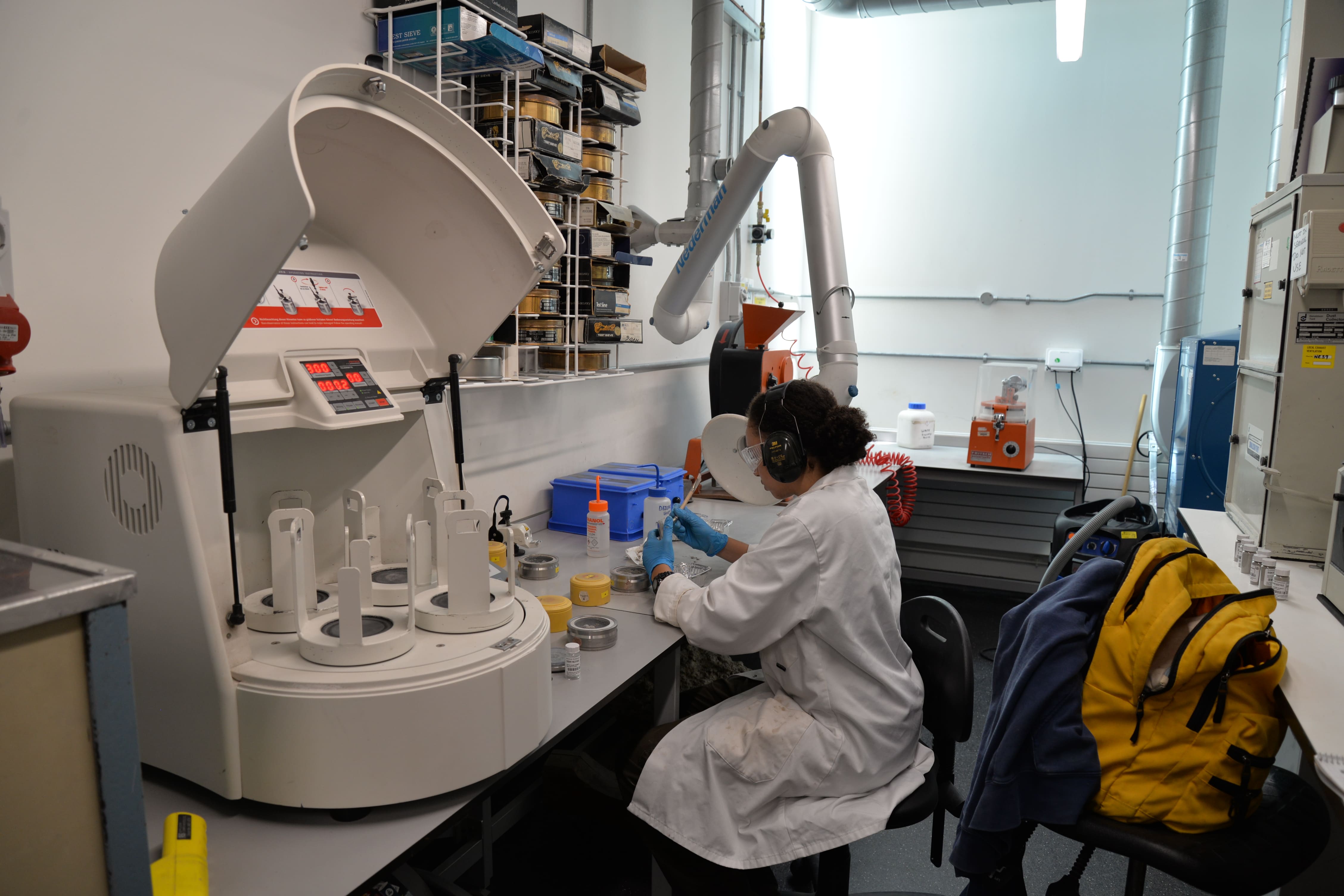
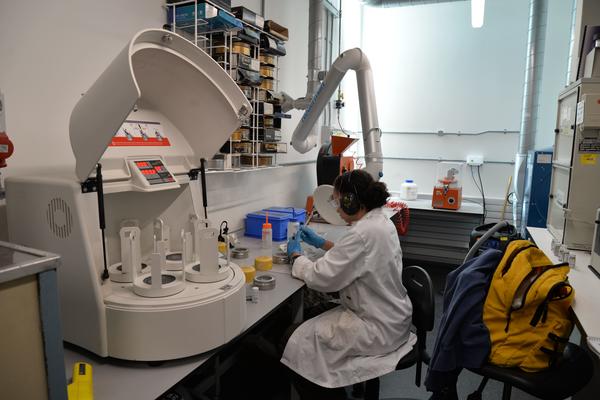
Fritsch Pulverisette 1 laboratory jaw crusher, model 1, with tempered steel jaws and side panels; accepts cubic or rounded samples of approximately 4 cm and reduces them to approximately 1 mm
-
Fritsch Pulverisette 2 automatic mortar grinder with hard porcelain and zirconium oxide grinding sets; produces fine powder of approximately 100 microns or smaller
-
Fritsch Pulverisette 5 planetary ball mill with four stations, agate and zirconium oxide bowls, and grinding balls in 20 mm and 15 mm diameters; reduces powder to approximately 20 microns
-
Roller mill with smooth and grooved steel rollers; suitable for moderate size reduction, for example for mineral picking or microfossil preparation
-
Vibrating cup Tema mill with agate and tungsten carbide bowl and rings; produces powder similar to a ball mill, with lower size-efficiency but larger-volume capacity
-
Endecotts Octagon 200 sieve shaker for dry sieving only; wet-sieving attachments are available in Sedimentology and Mineral Separation
-
Hydraulic rock splitter
We can produce sections of rock and unconsolidated sediment for research.
Slides can be polished or covered, including in standard or, by special request, larger size.
We can also produce polished blocks and grain mounts (both mapped and unmapped). We can impregnate samples with dyed resin, including UV resin.
Available equipment
- 2x Logitech LP50 lapping machines
- Buehler Isomet variable-speed saw
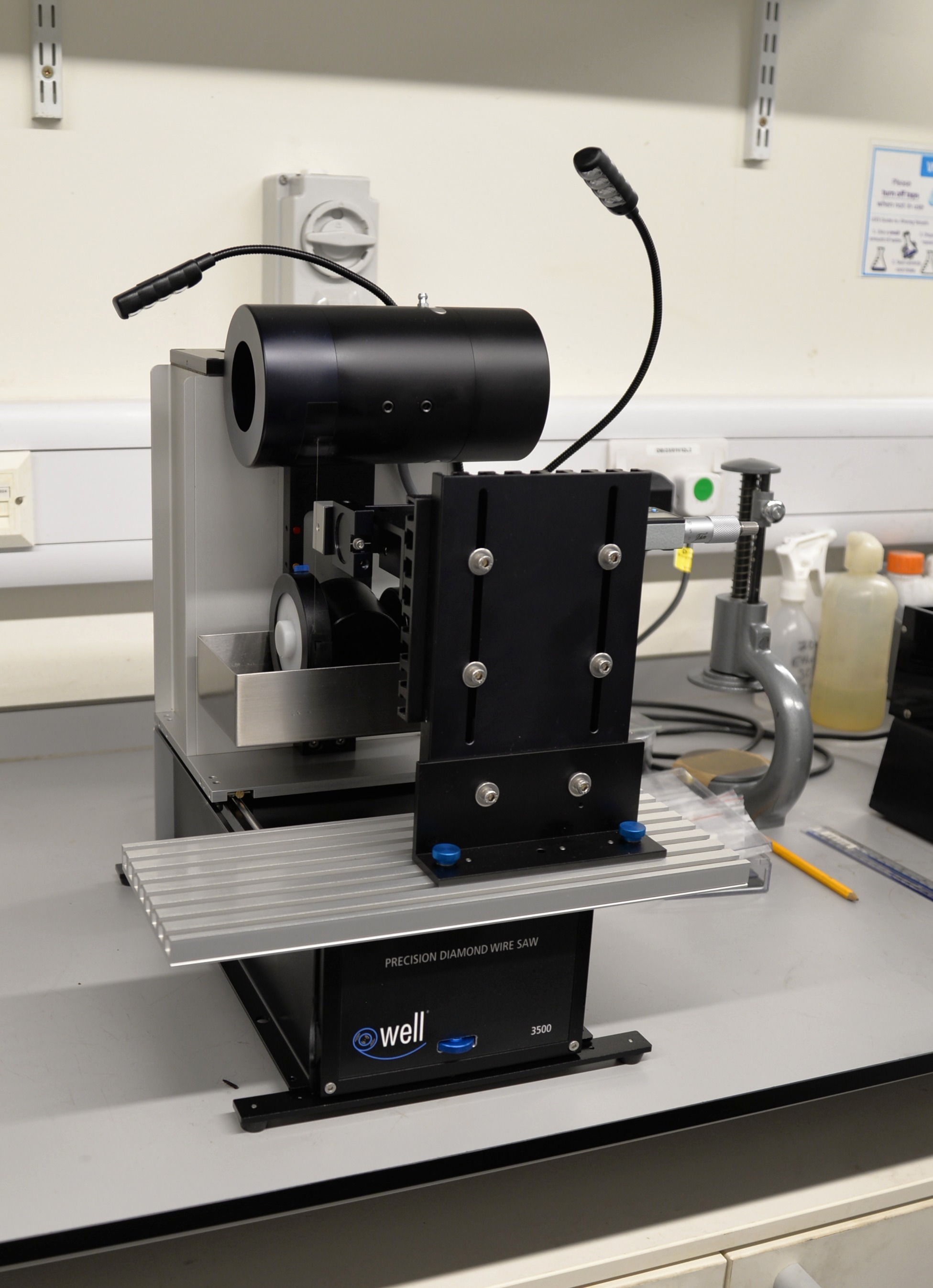
- Well 3500 reciprocating diamond wire saw; ideal for delicate or fine-scale cutting
- Logitech Model 15 variable-speed saw with continuous-rim or wire blade
- Logitech CS10 cut-off saw
- Logitech IU30 vacuum impregnating system
- Buehler vacuum chamber
- Loctite UV-curing lamp
- Dymax UV-curing lamp
- 4x spring-loaded mounting jigs
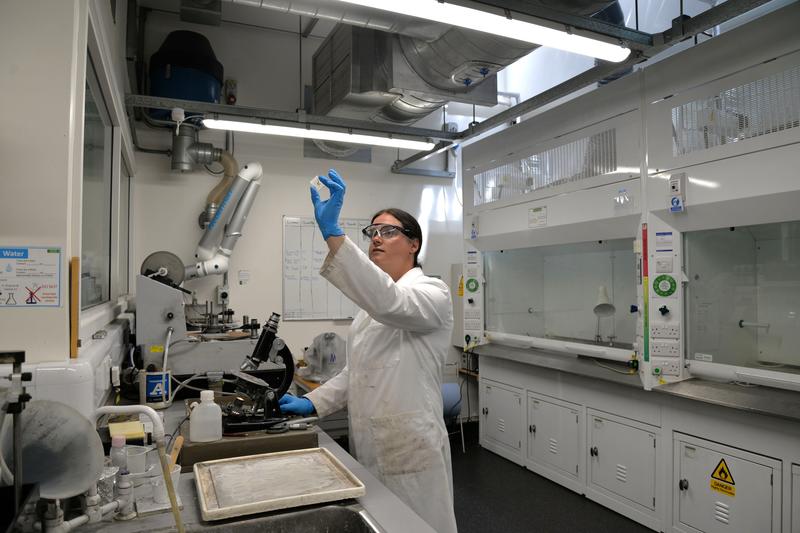
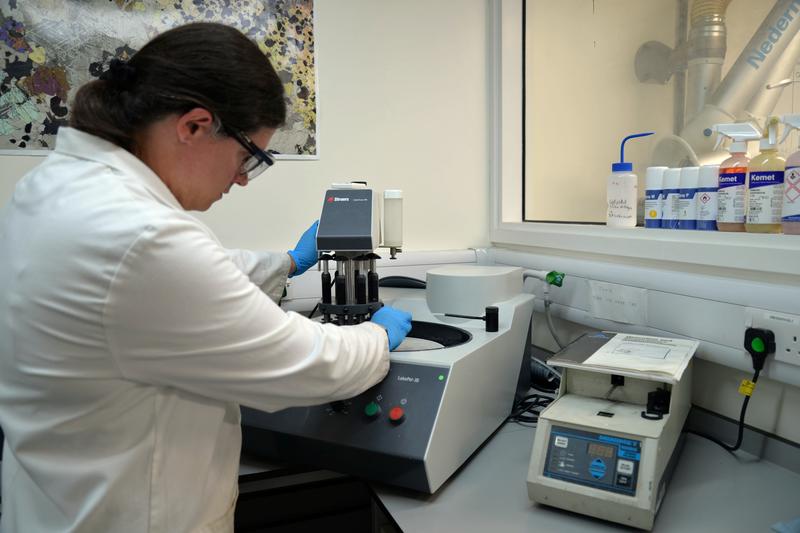
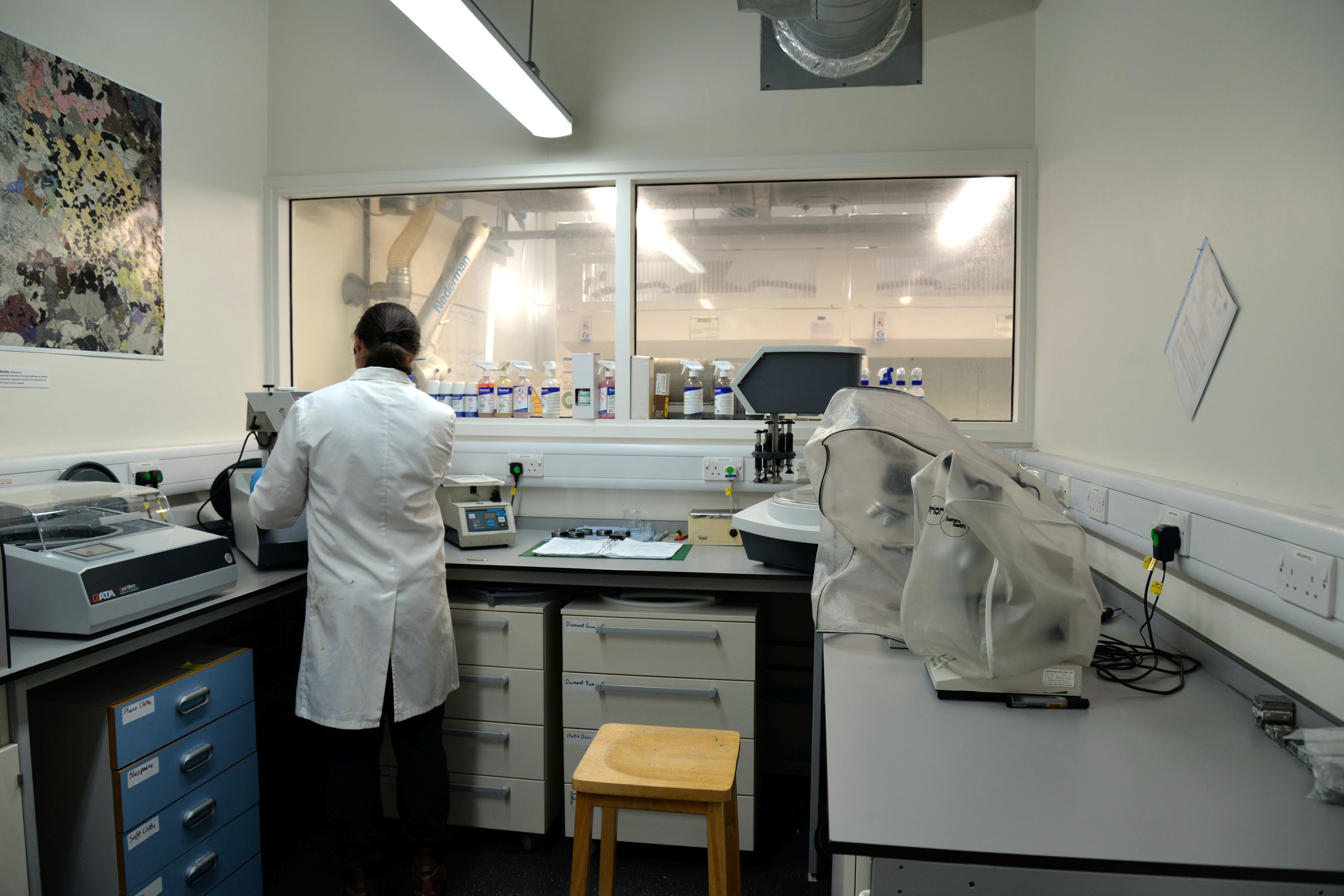
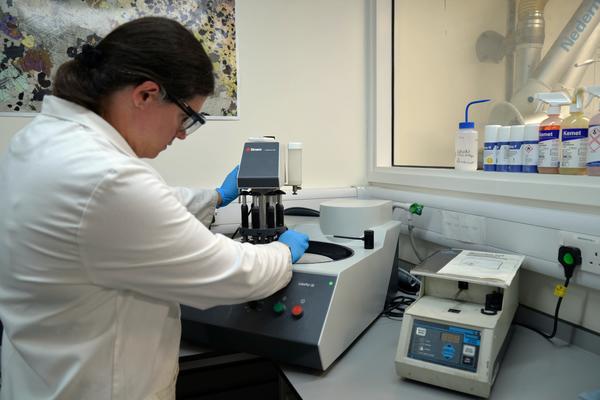
Our polishing laboratory is ideal for the preparation of polished thin sections and mounts suited to E-Beam work, with our finest grade polishing compounds allowing a polish down to 0.06 microns. We can also handle water-sensitive materials.
Available equipment
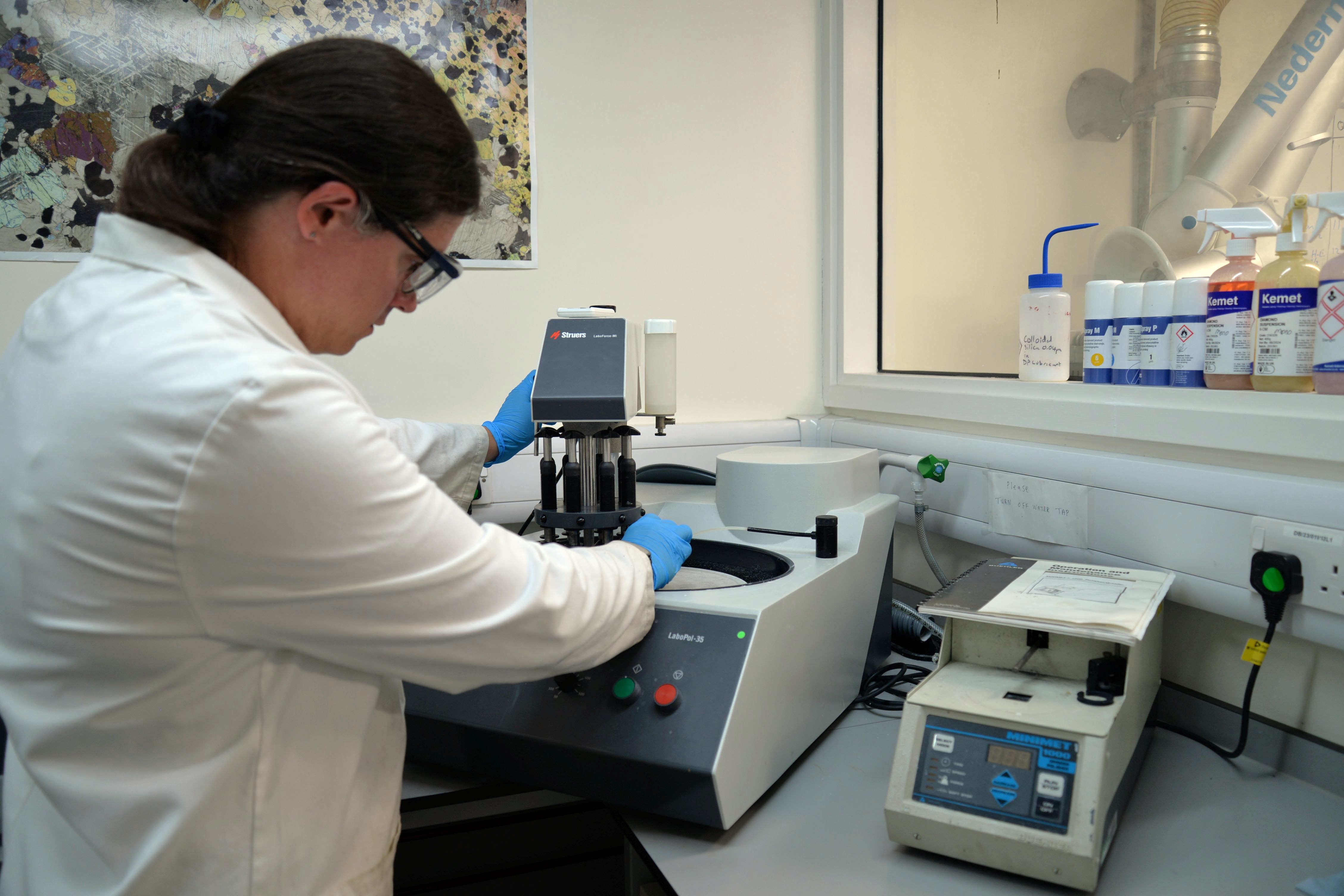
- Struers LaboForce-Mi polishing machine
- Struers LaboPol-35 polishing machine
- ATM Saphir vibropolisher
- Buehler Minimet single-sample polisher
- Ultrasonic cleaning bath
We can use a variety of techniques to pick samples for micropalaeontology and isolate mineral separates.
Available equipment
- Wild M8 stereozoom microscope for mineral or microfossil picking
- Laboratory oven
- Frantz isodynamic magnetic separator
- Ultrasonic tank
- Wet sieving using stainless steel sieves and dry sieving using brass sieves
- Acetate peel preparation

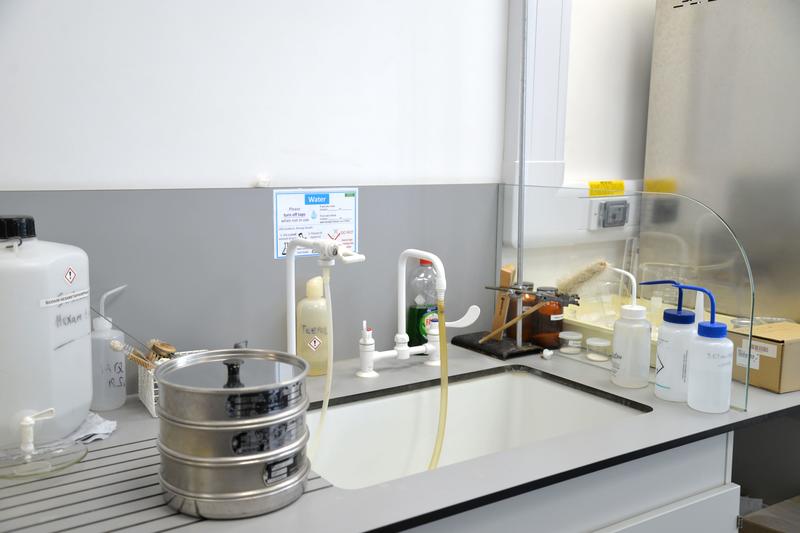
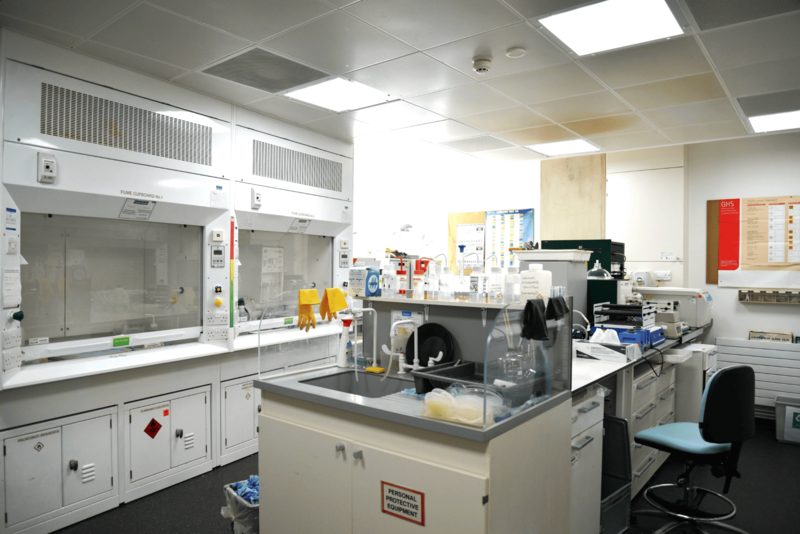
Available equipment
- Balances
- Centrifuge
- Ultrasonic tanks
- Laboratory ovens
- Furnace
- Quality water supply
- Coulomat 702
For more information regarding the wet chemistry lab, please contact Jerry (zheyu.tian@earth.ox.ac.uk).